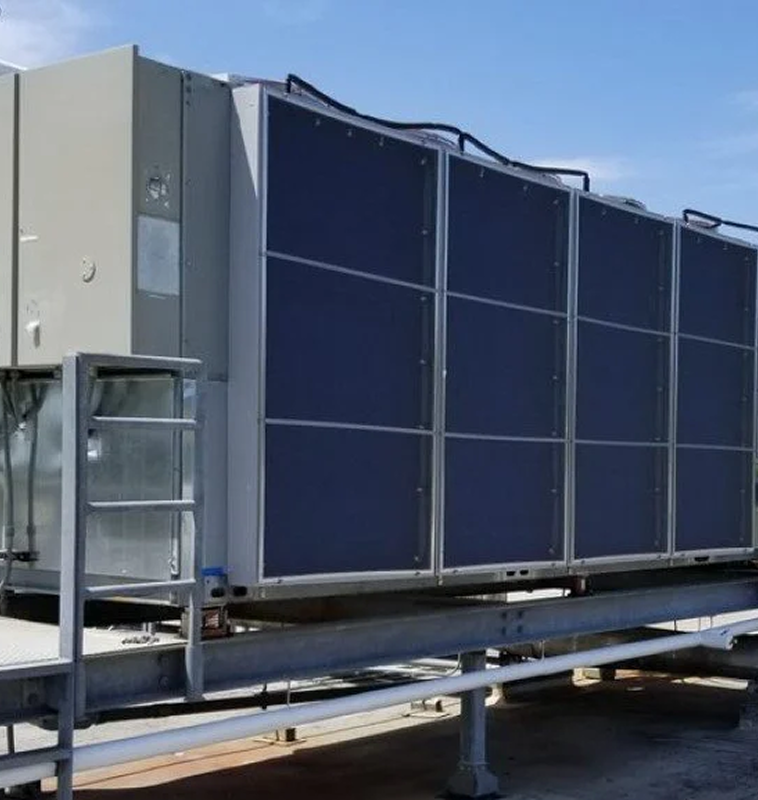
Close-up of industrial HVAC units and piping on a rooftop.

Design for Peak Conditions

Adiabatic precooling enables air-cooled infrastructure to maintain capacity during extreme ambient conditions—unlocking more deployable IT load from day one.

trusted by

How Peak+ Solves New Construction Constraints

In new data center construction, system capacity is constrained by extreme ambient conditions, not average performance. During peak temperatures, air-cooled systems lose capacity and consume more power, limiting deployable IT load. Peak+ integrates adiabatic precooling into the design to reduce inlet air temperature, stabilize performance, and unlock more usable capacity.

Solve Failing External CFDs

External CFD models often fail to capture:

  • Heat recirculation
  • Localized hotspots
  • Wind-driven airflow disruptions

Peak+ mitigates these risks by:

  • Reducing inlet air temperature variability
  • Stabilizing condenser performance
  • Creating a buffer against modeling inaccuracies
Large circular industrial ventilation fans on a rooftop with metal grates and railings.

Increase Revenue by Lowering Peak PUE

Even if annual PUE looks strong, peak conditions drive:

  • Power draw
  • Capacity limits
  • Operational cost spikes

By lowering peak PUE:

  • More IT load can be deployed
  • Power is used more efficiently at critical hours
  • Revenue per MW increases

Control Ambient Air Temperatures

Extreme heat drives performance loss in air-cooled systems. Controlling inlet air temperature is key to maintaining consistent output.

Peak+ systems:

  • Reduce entering air temperature during peak conditions
  • Flatten performance degradation curves
  • Maintain consistent cooling performance
Large circular industrial ventilation fans on a rooftop with metal grates and railings.

Capture Utility Rebates for Demand Reduction

Lowering peak electrical demand can qualify sites for:

  • Utility rebates
  • Demand response programs
  • Reduced infrastructure requirements

Peak+ helps:

  • Reduce peak kW draw
  • Improve grid friendliness
  • Strengthen financial project models

Proven Results in Real Climates

Enhanced Heat Rejection for High Density Data Center Design

Higher performance compute. Higher density server racks. Higher demand for power...

Regional Site Analysis: Phoenix, AZ

This is part of an ongoing series where we will publish site performance studies in specific...

Austin Energy Rebate Incentive

In 2019, Austin Energy issued a $300,000 rebate, its largest in 10 years, to Riata Corporate Park...

view all

Projects That Deliver

Dimly lit data center with rows of black server racks and overhead industrial lighting.

Confidential Data Center

State:   AZ
Size:   32 MW
Cooled Temp:   95F

Peak+ eliminated chiller capacity degradation at high ambient temperatures.

Aerial view of a large industrial building with parking lots surrounded by green fields and trees.

Confidential Data Center

State:   OH
Size:   53 MW
Cooled Temp:   95F

The power draw of chiller plant at temperatures above 95F would cause this data center site to oversubscribe the utility power allocation, causing an electrical outage. Suppressing condenser inlet temps to <95F kept the chiller plant power draw within a safe range

Aerial view of a large industrial building with parking lots surrounded by green fields and trees.

Confidential Data Center

State:   VA
Size:   50 MW
Cooled Temp:   106F

Peak+ eliminated chiller capacity degradation at high ambient temperatures.

Design for Peak Performance From Day One

 Request a Site Evaluation
Close-up of industrial HVAC units and piping on a rooftop.