Water Positive by Design
Water Positive by Design
How Precise Adiabatic Pre-Cooling Enables Hyperscale Data Centers to Achieve Water Stewardship Commitments
Introduction
The growing use of artificial intelligence tools is accelerating data center growth and raising concerns about water stewardship. To put this into perspective, artificial intelligence (AI) currently accounts for about 13% of all data center workloads and is projected to be 28% of the overall market by 2027.
Newer, more powerful AI servers use much more computing power and generate a lot more heat in the same amount of space as older servers and equipment do. That extra heat is harder to get rid of, or reject from data centers, which is putting more pressure on owners and operators to carefully consider their approaches to cooling their servers and the facilities that house them.
Just a few years ago, the predominant approach to rejecting heat from data centers was evaporative cooling via cooling towers and evaporative walls, which use the cooling effects of water evaporation to reject heat from buildings. But cooling towers and evaporative walls consume significant amounts of water per unit of heat rejection, so as compute density increases with more powerful chips per unit area of data centers, the absolute units of heat rejection likewise have increased, and have made the traditional cooling tower and evaporative wall approaches untenable for all but the most water-abundant locations.
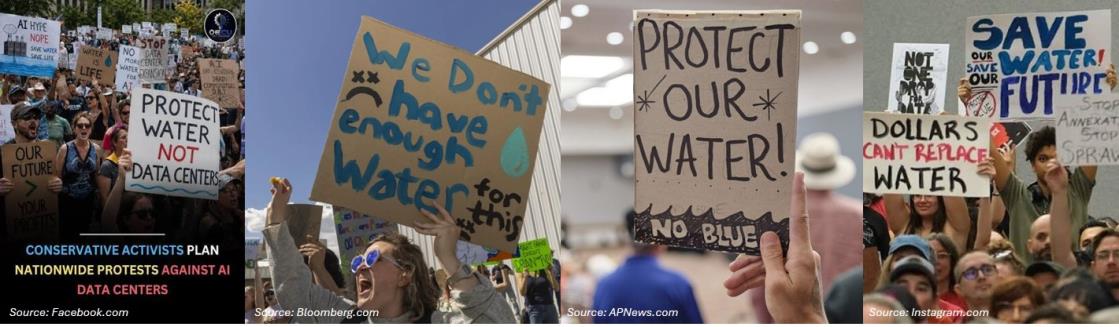
The data center industry pivoted away from designs that use evaporation as the primary cooling method years ago. Yet water use is now the primary target of data center resistance at the local, regional, and national levels. Those who are educated about regional water usage understand that data centers are not the primary cause of regional water scarcity, and opposing data centers will not help resolve it.
In 2028, hyperscale data centers are expected to consume between 15 and 31 billion gallons of water.
Four major hyperscale data center operators—Microsoft, Google, Amazon, and Meta—have pledged to use less water directly (through less water-intensive cooling) and fund water-replenishment projects in other locations to become water-positive by 2030. These operators risk falling short of that promise.
Hyperscalers Have Similar 2030 Water-Positive Goals
- AWS: Water positive by 2030. For every gallon of water used in data center operations, it will return more than a gallon back to the communities where they operate.
- Meta: Water positive by 2030. Using water efficiently in operations and returning more water than they consume in water-stressed basins through projects that address local needs and context.
- Microsoft: Water positive by 2030. Minimizing water use, replenishing local watersheds, investing in community-driven water solutions, advancing innovation, and shaping policies that support water resilience.
- Google: Committed to replenishing 120% of the freshwater it consumes across offices and data centers by 2030.
These pledges typically don’t account for the water used to generate the electricity that powers their data centers. These replenishment activities (such as funding wetlands restoration or pipe repair) do not literally return water to the local watershed. That means communities near the data center can still see their own water supplies strained, even as the company points to a global water-positive balance sheet.
The fix has to start with how data centers cool their servers in the first place. Closed-loop, waterless systems are a step in the right direction, yet often trade water savings for higher electricity use (and the hidden water footprint of electricity generation). Simply trying to be dry at the data center’s physical location doesn’t solve the underlying problem; it just shifts it to another community.
The more complete answer is a hybrid approach: closed-loop systems, using small, precisely-timed bursts of evaporative cooling with reclaimed (non-drinking) water. This can actually deliver on water-positive promises without shifting the burden onto the power grid.
Water Problem in Hyperscale Data Centers
There is no such thing as a waterless data center. Data centers use water in two ways: to cool servers and to generate power through the electric utility. And water use remains an opaque metric in the data center world. Some owners/operators disclose their direct water use, but many do not. And the use of water is problematic, largely in specific regions—72% of new data centers built in 2022 are in just five water-stressed states.
Direct vs. Indirect Water Use
Direct Water Use
Data centers are often cooled by evaporative cooling towers and evaporative walls—dissipating heat through evaporation of potable water that is lost to the atmosphere and thus directly consumed by the data center. In many locations, these facilities get that potable water from the same municipal water source as the homes and businesses in the area.
Indirect Water Use
The other part of the water-use picture is the water used indirectly during the generation of electricity to power the data centers. This is especially true in locations that generate power using nuclear, natural gas, or coal, which can require high volumes of cooling water. Even a data center that uses little to no water on-site for cooling can still indirectly consume significant amounts of water, hidden from consumers and watchdog groups.
Reputational Risk
Water-positive goals are important for data centers to demonstrate their resource stewardship. But if a facility does not account for indirect water use, it risks reputational damage when (not if) indirect water use comes to light and questions are raised about why the facility owner was not more forthcoming and responsible in its water use tracking and reporting.
And thanks to recent news stories about large data centers that have not been water-positive, data centers of all shapes and sizes struggle with their reputation in the communities where they are located. Even those that work to be environmentally sustainable at the corporate level.
Real-World Examples
- Iowa — In 2024, Google’s Council Bluffs data center consumed 1.3 billion gallons of drinking water (~3.7 million gallons per day).
- Utah — Rumors suggest the Stratos data center will use 16.6 billion gallons of water/year to operate the gas turbines for its onsite electric generation facility.
Water Stress
Water stress is a measure of how much water is used relative to the amount of water that is naturally available.
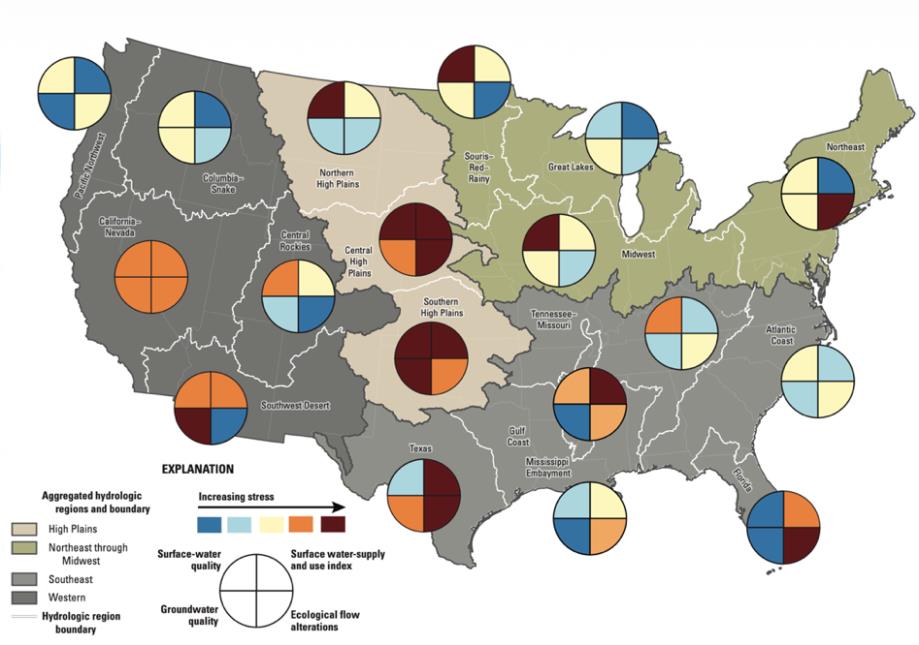
Typically, data centers have chosen sites for their facilities based on power availability, land costs, and connectivity to low-latency fiber networks. In a majority of projects built and commissioned to date, water has not been a factor in deciding where to build. This is evident in the significant overlap between clusters of data centers and stressed watersheds. Analysis of approximately 14,000 data centers worldwide found that one-third of those currently under construction may experience more water-scarcity days by 2050. Because of increased scrutiny of data center water use, owners and operators are now considering water as the fourth pillar in evaluating a site’s suitability.
Phoenix, AZ
Data center water use: 905 million gallons annually, or 2,777 acre-feet in 2025 (under a tenth of the state’s annual water use)—equivalent to roughly 10,000 homes annually in the Phoenix area.
Loudoun County, VA
Approximately 40 data centers cooled with about 700 million gallons of reclaimed water annually. Potable water use has been rising—roughly 899 million gallons used in 2023, a 250% increase over earlier years.
Purple Pipe Water
Purple pipe refers to the industry-standard color for non-potable reclaimed/recycled water distribution pipes, distinct from sewer lines and drinking water (aka, potable water). There is no national standard for this type of water; states regulate the treatment and distribution of recycled water independently. Several states, such as California and Florida, have robust regulations for water reuse. Others offer guidelines, and some states regulate on a project-by-project basis based on treatment capacity and the limits of the distribution network.
| Market | Water Stress | Purple Pipe | Notes |
|---|---|---|---|
| Phoenix, AZ | Extreme | Excellent | One of the most developed reclaimed networks in the US; some AZ counties mandate reuse |
| Las Vegas, NV | Extreme | Excellent | Southern Nevada Water Authority — active reclaimed water program |
| Dallas, TX | High | Good | North Texas MWD has active reclaimed programs |
| Denver, CO | High | Good | Denver Water expanding reclaimed network |
| Northern Virginia | Moderate | Moderate | Fairfax Water and Prince William County programs expanding |
| Silicon Valley, CA | High | Good | Santa Clara Valley Water District — widely available |
| Chicago, IL | Low–Moderate | Moderate | MWRD reclaimed programs in industrial corridors |
| Atlanta, GA | Moderate | Growing | State policy increasingly mandating reuse for large industrial users |
Water stress ratings based on the WRI Aqueduct Water Risk Atlas.
Regulatory Pressure as a Business Risk
Any delay in permitting a data center project equals delays in time-to-revenue. This constrains new capacity as severely as grid interconnection. As with reclaimed water, water rights and water utility regulation are handled by each state and, in many cases, by local municipalities. This means that each project faces a unique permitting process with different regulations, utility companies, government organizations, and timelines to factor in the planning.
The compliance risk is compounded by an information gap: many companies treat water usage as proprietary information, and local utilities often decline to release customer-specific data. This leaves data center operators unable to share a proven track record with permitting authorities. A further risk is due to the growing backlash against data centers in communities across the country—resulting in temporary or permanent bans on data center construction.
State-Level Regulatory Movement
- Arizona — The state’s FY2026 budget includes a three-year moratorium on new data center tax incentives, driven in part by concerns over water use.
- Virginia — Increased scrutiny of data center water allocations, including several bills in the pipeline requiring data centers to assess potential impact on water resources and more.
- Georgia — Increased scrutiny of water use, with several cities and counties passing moratoriums or ordinances about data centers.
Why Hyperscalers Can’t Get There From Here
False Binary
The data center industry has treated water use as a choice between efficiency and peak performance. The pitch of waterless cooling is something companies use to appease municipal governments, regulators, and community members. Yet the science means it isn’t as easy to be true to that promise.
Cooling towers are thermodynamically efficient, and they are also incompatible with water-positive goals. Data centers cannot reduce consumptive water loss without changing the fundamental heat rejection mechanism. Closed-loop systems (air-cooled chillers, dry coolers) do not use any water directly, but create a severe efficiency penalty during peak ambient conditions.
A cooling system’s efficiency (coefficient of performance) can drop by nearly half on the hottest days compared to a mild day. In other words, the days when you most need the cooling to work well are exactly the days it works worst.
In a place like Phoenix, where summer temperatures can hit 118°F, the real engineering challenge is worse than that number suggests. In dense data center developments, hot air from cooling equipment and backup generators recirculates into the cooling system’s air intake, which can add 40°F or more to the outside temperature. That means a cooling system isn’t dealing with 118°F air; it is dealing with temperatures closer to 150°F or higher. At those temperatures, waterless dry cooling systems either have to be massively oversized to compensate, or they can’t keep up.
Engineers run computational fluid dynamics (CFD) before a facility is built to predict exactly these kinds of problems. More and more, these simulations show that dry cooling designs will not work in real-world conditions. Not just in Phoenix or similar locations, but anyplace where high-density AI computing creates its own localized heat issues.
Water-Positive Deadline
The water-positive deadline many hyperscale data centers have set for themselves poses a challenge for some, especially in new data center construction. With data center construction commissioning lead times on the order of three to four years, and the full project lifecycle, including regulatory approvals and the availability of power infrastructure, adding more to that timeline, the window to hit 2030 targets through new builds is already closing.
It is also important to note that, for existing data centers and hyperscalers’ water-positive pledges, these goals are based on achieving efficiencies and using mitigation techniques, such as replenishment projects. These do not technically replace the water used in the data center; they minimize water loss in other locations, such as funding leak repairs or restoring wetlands. These data centers also risk being accused of greenwashing by excluding indirect water use at local power plants in their water-positive goals.
| Company | Pledge | WUE Target | Gap / Status |
|---|---|---|---|
| Microsoft | Water positive by 2030; replenish more than consumed globally | Not publicly specified | 1.7B gal consumed FY2022 (+34% YoY) |
| AWS | Water positive by 2030; return more than consumed | 0.18 L/kWh by 2030 | 53% of the way to goal to be water positive. 0.15 L/kWh in 2024 |
| Replenish 120% of water consumed by 2030 | 120% replenishment | 8.1B gal consumed 2024; AI buildout concentrated in stressed regions | |
| Meta | Water positive by 2030 in water-stressed regions | Restoration-based targets | AI clusters increasing per-MW water budget |
Precise Adiabatic Pre-Cooling: How It Works
Precise adiabatic pre-cooling is the key to making a waterless cooling system perform better in hot weather. By strategically adding a small amount of water, data centers find the line between using no water and having the system struggle on the hottest days, and using water 24/7. They use a little bit of water, only on the hottest days, only at the air intake, to get most of the cooling benefit of a wet system with a small fraction of the water consumption.
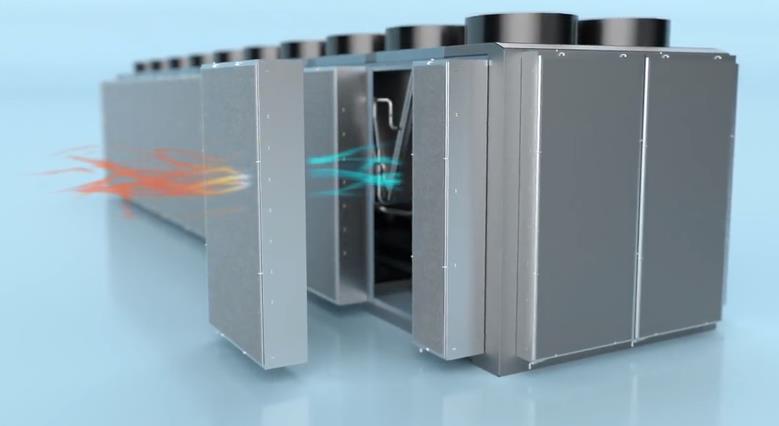
When you spray a fine mist of water into the air entering a cooling system, the water evaporates and cools the air, pulling the temperature from the dry-bulb reading toward the wet-bulb number. The gap between these two numbers is the amount of free cooling you can get this way. In Phoenix, because the desert air is so dry, that gap is huge—spraying water can cool incoming air by 25–40°F. In humid Northern Virginia, the air is already fairly saturated, so evaporation offers only 10–20°F of cooling benefit, at the hottest point of the day when it is most needed. And that is without accounting for additional heat sources, such as hot exhaust air blowing back into the intake.
| Attribute | Conventional Adiabatic | Peak+ Precise Adiabatic |
|---|---|---|
| Control logic | On/off or simple thermostat | Predictive, weather-integrated, continuously modulated & optimized |
| Water use pattern | Continuous during warm periods | Activated only when thermodynamic benefit exceeds threshold |
| Water efficiency | Low — significant waste from over-spray / over-soaking | Up to 80% reduction vs. flooded media adiabatic approach |
| Nozzle technology | Flooded media pad-based or extremely high-pressure spray (~1500–2000 psi) | Low pressure (~60 psi) precision nozzle arrays |
| Purple pipe compatible | Potable water typically required; Reverse Osmosis (RO) often required for high-pressure systems | Yes — turnkey engineered water treatment system included, enabling reclaimed/purple pipe water use |
| BMS/DCIM integration | Standalone, no integration | Integrates with BMS, DCIM, and real-time weather data |
| Optimization | None | Continuous optimization of water volume vs. cooling benefit |
The Purple Pipe Advantage
Why Use Reclaimed Water
Only 3% of Earth’s water is considered freshwater (not seawater), and only 0.5% is readily available for humans. When data centers use drinking-quality water, a scarce resource, they divert it from communities that need it. When they use reclaimed water instead, they still consume the same amount of water, but it’s pulled from a non-drinking water source. Importantly, purple pipe water supply is also not infinite—a city or region generates a set amount of treated wastewater, so if every data center in the area used purple-pipe water in its cooling tower heat rejection systems, that would strain capacity, as well.
What Is Purple Pipe Water?
- Reclaimed water is municipal wastewater treated to a defined standard for non-potable reuse. Named for the purple piping that distinguishes it from potable water systems.
- Treatment levels vary depending on the intended application.
- Typical uses: irrigation, industrial cooling, groundwater recharge, toilet flushing.
- Key attribute: excluded from potable water consumption accounting under virtually all US state regulations and under the WUE (The Green Grid).
- Not a loophole — reclaimed water reuse is exactly what water-positive frameworks are designed to incentivize.
WUE
Water usage effectiveness (WUE) is the standard metric for discussing water efficiency in data centers. The lower the number, the better. Facilities can claim to use zero potable water for active cooling. This is verifiable and auditable—for drinking-quality water only. The Green Grid excludes reclaimed water from this calculation. This means a data center can report a WUE of near zero, no matter how much reclaimed water it uses, hiding the true amount of water used to cool it.
Replenishment vs. Reduction
There are two ways a company can claim credit for water stewardship: using less water in its own operations, or paying for water-saving projects somewhere else (such as restoring a wetland or funding irrigation upgrades on a farm) and counting them as offsets to its own water consumption, similar to carbon offsets.
Regulators and ESG (environmental, social, governance) auditors are starting to recognize this distinction and grade companies differently depending on what they are actually doing. Thus, a company that is primarily buying replenishment credits with water-saving projects somewhere else may not get credit for being truly water positive.
Community Benefits and Goodwill
When a data center developer pays to improve the purple pipe infrastructure for a city or region, such as new pipes, treatment upgrades, or pump stations, this is a lasting public good. The updated system continues to benefit the area for decades by providing reclaimed water for irrigation and other industrial uses, in addition to the data center use.
Permitting
The ability to present a concrete plan for using reclaimed water, especially in water-stressed jurisdictions, can accelerate water permit approval and ease a community’s concerns. Since permit delays are one of the two major bottlenecks in constructing data centers (the other is connecting to the power grid), using purple pipe water could be a fast track to getting the project built, shortening the time to power.
Quantified Benefits
01Lowers Peak PUE
Cooling systems, power capacity, and backup generation are all sized to handle the worst cases—the hottest day, the highest load, the moment when all systems are working hardest at the same time. While average power use effectiveness (PUE) or annual PUE numbers are commonly cited in the data center industry, average PUE is not a meaningful metric for designing the power and water infrastructure or for assessing water or power stress during worst-day conditions. Peak PUE ties directly to design-day parameters: the same extreme ambient conditions that degrade coefficient of performance (COP) and cause external CFD analyses to fail also determine how much cooling infrastructure a facility truly needs, and how much of the power budget is allocated to cooling versus computing power.
02Unstrands Capacity to Free Up Scarce Power for Additional Critical IT Load
Improved heat rejection efficiency is not just about lower costs; it also means more power, already wired and ready to go, is available for server operations, without drawing more from the grid. Every tenth of a peak PUE point on a large campus represents real MW of overhead load. Unstranded megawatts are available immediately for additional critical IT load, from infrastructure already paid for, without waiting in line for the electric utility to build new substations or transmission lines. And, critical IT load directly drives data center revenues and profits.
03Helps Solve Failing External CFD Analyses
In the real world, data center sites often have a problem dry/closed-loop heat rejection systems can’t handle: the hot air exiting the cooling equipment itself, plus exhaust heat from on-site backup diesel generators, can recirculate and get pulled into the cooling system’s air intake—meaning the system is trying to cool itself with air that’s already hot. This is a common scenario for AI data center chiller yards and results in failing CFDs. The Condenser Entering Air Temperatures (CEATs) are so high that the air-cooled equipment compressors cannot handle the heat, chiller capacity degrades below acceptable levels, and compute loads must be curbed to reduce the heat rejection loads.
An adiabatic assist system, which adds a small, precisely optimized amount of evaporative water-spraying to the air before it reaches the condenser coils of air-cooled chillers or the coils of dry coolers, addresses these failing CFD challenges directly. Because air-cooled chillers typically derate above 105°F and often risk shutdowns above ~131°F, adiabatic assist is often the only approach suitable for addressing failing CFDs caused by hot-air recirculation and generator exhaust.
04Reduces Potable Water Usage
If a large data center campus is connected to a reclaimed water supply instead of the drinking-water system, every gallon it uses for cooling is non-potable and, by definition, doesn’t count toward a facility’s WUE score.
In contrast, a comparably-sized data center using traditional cooling towers with drinking water consumes a calculable, very large amount of potable water. This isn’t a marginal tweak; this is the difference between potentially stressing a community’s drinking water supply and essentially not touching it at all.
What Decision Makers Need to Know
Environment
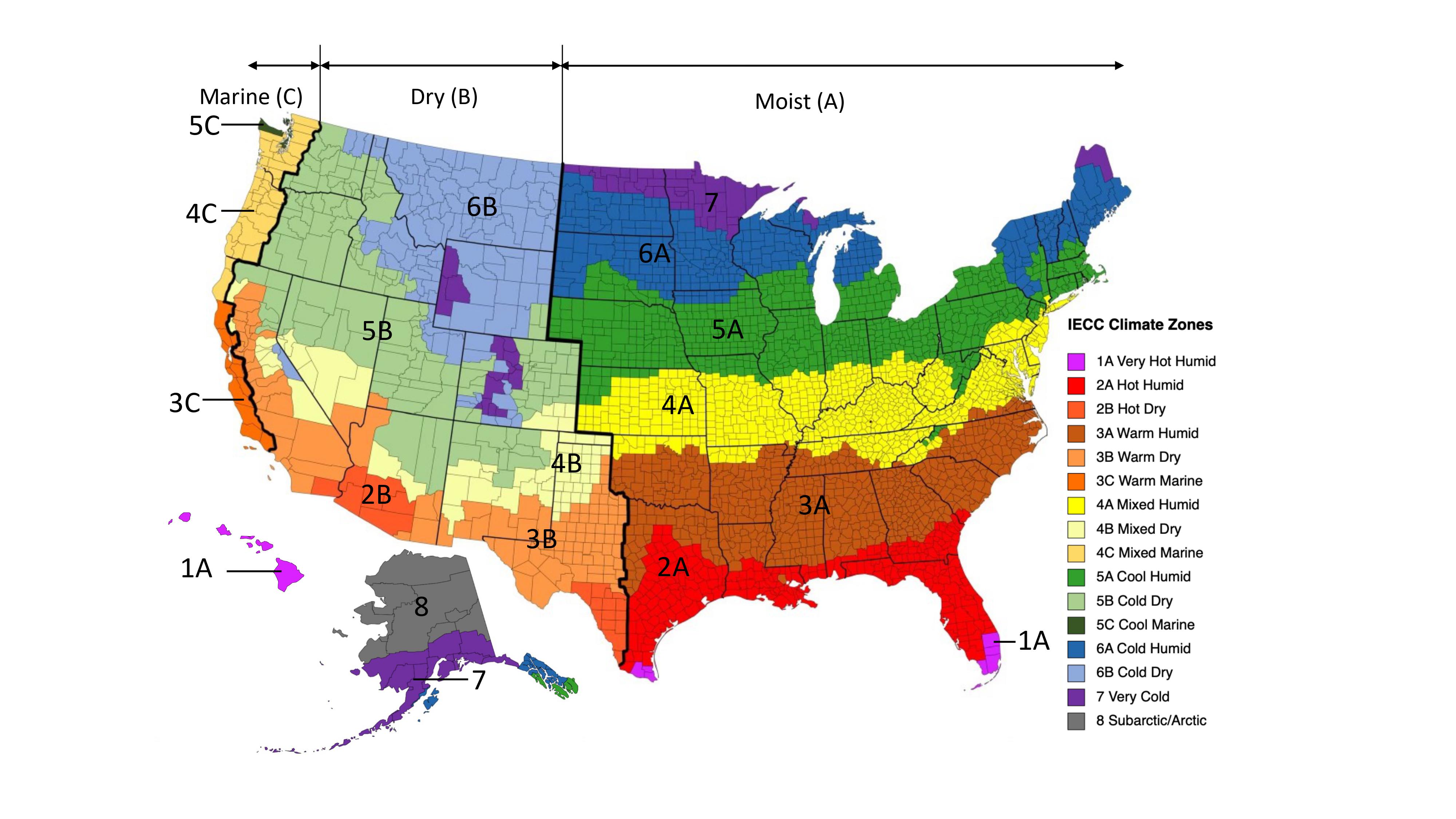
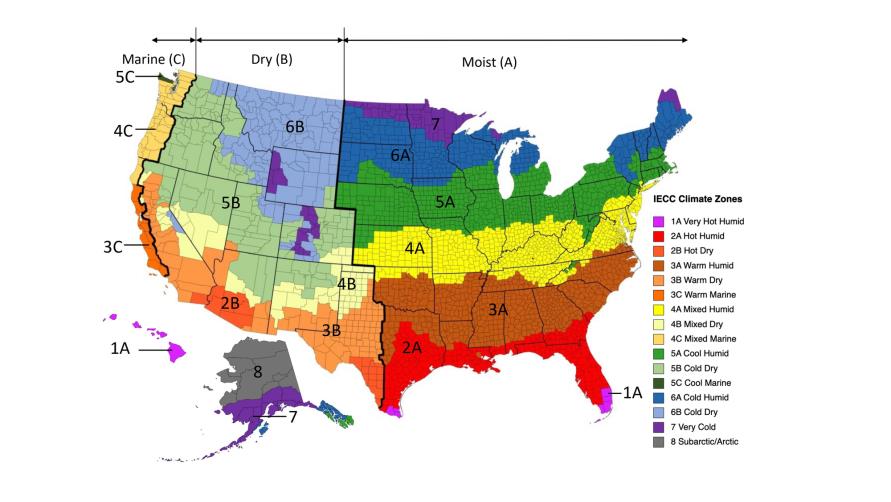
Climate suitability is a starting point, but adiabatic use cases are far more geographically diverse than commonly believed. Adiabatic pre-cooling is not just for arid climates. Rather, the technology is beneficial for any facility with a gap between the ambient temperature at the cooling equipment intake location and the wet-bulb temperature.
Dense data center campuses create localized heat problems—hot air recirculating around equipment yards and generator exhaust—regardless of location or the outside weather. Notably, the ambient air temperature at the air intake location of air-cooled equipment is often 15°F or more than the temperature reading at the local airport.
In fact, many real-world use cases for adiabatic pre-cooling include places like Virginia, Georgia, New Jersey, and Oregon, none of which are considered arid climate areas. Of course, data centers located in places like Texas, Oklahoma, Arizona, Colorado, and California also have strong use cases for adiabatic pre-cooling.
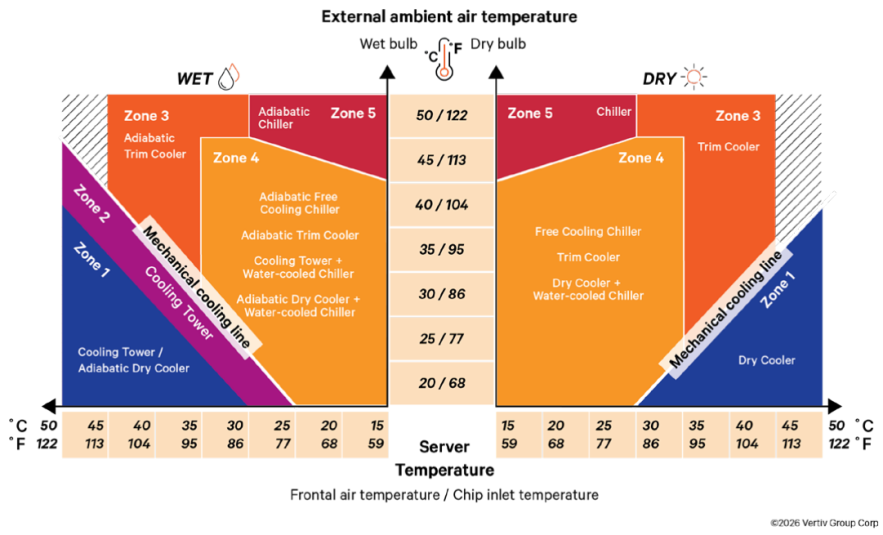
The chart below, adapted from Vertiv’s cooling technology selection framework, maps external ambient temperature against server intake temperature. It shows where dry cooling alone tops out and adiabatic assist extends the usable range before a full chiller changeover is required—illustrating why the technology applies well beyond traditional arid climates.
Cooling Architecture
The ideal fit for adiabatic pre-cooling is brand new data center construction, or retrofits where the existing system is already dry (air-cooled chillers and/or dry coolers). This technology is also compatible with hybrid facilities that already use a mix of wet and dry cooling. In these cases, the technology can reduce or even eliminate the need to run the water-hungry cooling towers.
A Las Vegas data center currently using about 170 million gallons of city water each year is expected to cut that by about 98% by adding adiabatic pre-cooling to its system.
Source: Peak+ case study
Purple Pipe Integration Pathway
- Check with the city/utility to determine if reclaimed water is available at the site and, if so, what quality it is.
- Work with Peak+ to figure out exactly how much water you’ll need given your target performance.
- Because the reclaimed water straight from the municipality may not be clean enough for sensitive cooling equipment, Peak+ designs an on-site treatment system to clean the reclaimed water to the precise standard the misting equipment needs (filtering out particles, removing minerals that cause scale buildup, killing bacteria with UV light, etc.).
- Determine how much backup water storage is needed on-site in case of an interruption to the reclaimed water supply. Locations typically need a tank holding 10,000–50,000 gallons, enough to run for 24 hours at peak demand.
- Get permission from the utility to connect to their reclaimed water pipes.
- Physically install the equipment, including hooking it up to the building’s automated control system so it runs automatically.
Timeline
When building a greenfield data center, designing in adiabatic-assist cooling from the start adds no extra time to the construction schedule; you specify it upfront like any other system.
When retrofitting an existing facility, installation takes roughly 3–6 months to be fully commissioned and operational. Compare this to the longer timeline for upgrading power grid infrastructure to address the cooling issue, which can take 18 to 36 months, depending on local circumstances.
Operational Simplification
There is also a maintenance and operations payoff, separate from the energy and water savings. Switching away from traditional wet cooling towers solves many unglamorous, real operational headaches:
- Protects the cooling equipment’s internal coils from corrosion.
- Eliminates the single biggest source of Legionella bacteria risk in a building (cooling towers are the classic breeding ground for Legionnaires’ disease outbreaks, so removing them removes that liability entirely).
- No longer need an ongoing chemical water-treatment program to keep the tower water from growing algae/bacteria or corroding pipes.
- Eliminates the periodic draining and refilling of tower water that wastes water and requires wastewater disposal.
- Reclaimed water supply tends to hold up better during droughts than regular drinking-water supplies, since utilities often restrict potable water use first and protect the use of reclaimed water for longer.
Time to Act
For the data center industry, water stewardship is no longer a checkbox on the ESG report. It is a real restriction on the ability to do business. Permit delays, regulatory pressure, and failing CFD analyses cost developers time and money. First movers will build community relationships and the engineering track record to lead the industry.
Start by auditing your existing closed-loop portfolio in thermally challenged, water-stressed markets. These will give you the highest return on investment, facilities where the combination of heat stress, regulatory issues, and water risk is most acute, and where the operational and reputational benefits of a purple pipe solution are most immediate.
Then get ahead of what is becoming an industry standard. Specify purple pipe feed as a baseline requirement on all new closed-loop facilities in applicable climates. Work proactively with local utility and community leaders early: the purple pipe conversation is also a community benefits conversation, and developers who invest in reclaimed water infrastructure are making a lasting contribution to the places where they build.
Finally, move with urgency on existing commitments. The window for new campuses to contribute meaningfully to water-positive targets by 2030 is closing fast and decisions made in the next twelve to eighteen months will determine whether you can meet those goals with real operational performance, not simply offsets.
Contact Peak+
Contact Peak+ today to learn more about how adiabatic pre-cooling can transform your data center cooling solution.
Appendix: Sources
Sources Cited
Amazon. “Water Stewardship.” Undated; accessed Oct. 2, 2026. https://sustainability.aboutamazon.com/natural-resources/water
Amazon Web Services. “Sustainable Cloud Computing.” Undated; accessed Oct. 2, 2026. https://aws.amazon.com/sustainability/
Arizona Capitol Times. “Arizona’s Data Center Moratorium Is Only the Beginning.” Opinion by Rep. Junelle Cavero. June 12, 2026. https://azcapitoltimes.com/news/2026/06/12/arizonas-data-center-moratorium-is-only-the-beginning/
Bloomberg News. “AI Is Draining Water From Areas That Need It Most.” By Leonardo Nicoletti, Michelle Ma and Dina Bass. May 8, 2025. https://www.bloomberg.com/graphics/2025-ai-impacts-data-centers-water-data/
Data Center Watch. “Briefing 03/06/2025.” By Miquel Vila. March 6, 2025. https://www.datacenterwatch.org/newsletter/blog-post-title-four-wt7sw
DatacenterDynamics. “Google Claims It Will Replenish 120 Percent of the Water It Uses by 2030.” By Sebastian Moss. Sept. 10, 2021. https://www.datacenterdynamics.com/en/news/google-claims-it-will-replenish-120-percent-of-the-water-it-uses-by-2030/
Denver Water. “Recycled Water.” Undated; accessed Oct. 2, 2026. https://www.denverwater.org/your-water/recycled-water
Environmental and Energy Study Institute. “How Water Reuse Can Address Scarcity.” By Jamiya Barnett. Dec. 17, 2024. https://www.eesi.org/articles/view/how-water-reuse-can-address-scarcity
Fairfax County Public Works and Environmental Services. “Water Reuse.” Last updated Sept. 24, 2025. https://www.fairfaxcounty.gov/publicworks/wastewater/water-reuse
Georgia Public Broadcasting. “A ‘Wave’ of Data Center Ordinances Sweep Through GA Counties. How Strict Are They?” By Kala Hunter and the Ledger-Enquirer. Oct. 22, 2025. https://www.gpb.org/news/2025/10/22/wave-of-data-center-ordinances-sweep-through-ga-counties-how-strict-are-they
Goldman Sachs. “How AI Is Transforming Data Centers and Ramping Up Power Demand.” Aug. 29, 2025. https://www.goldmansachs.com/insights/articles/how-ai-is-transforming-data-centers-and-ramping-up-power-demand
Google. “Google’s Water Stewardship Commitments for Local Communities.” By Bikash Koley and Ben Townsend. June 3, 2026. https://blog.google/company-news/outreach-and-initiatives/sustainability/new-water-stewardship-commitments/
Lawrence Berkeley National Laboratory. “2024 United States Data Center Energy Usage Report.” By Arman Shehabi and nine co-authors. Dec. 20, 2024. https://escholarship.org/uc/item/32d6m0d1
Meta. “Restoring More Water Than We Consume by 2030.” Aug. 19, 2021. https://about.fb.com/news/2021/08/restoring-water/
Meta Sustainability. “Water.” Undated; accessed Oct. 2, 2026. https://sustainability.atmeta.com/water/
Metropolitan Water Reclamation District of Greater Chicago. “What We Do.” Undated; accessed Oct. 2, 2026. https://mwrd.org/what-we-do
Microsoft. “Sustainable by Design: Transforming Datacenter Water Efficiency.” By Noelle Walsh. July 25, 2024. https://www.microsoft.com/en-us/microsoft-cloud/blog/2024/07/25/sustainable-by-design-transforming-datacenter-water-efficiency/
MSCI. “When AI Meets Water Scarcity: Data Centers in a Thirsty World.” By Yoon Young Chung, Federico Darakdjian and Tom Leahy. Dec. 9, 2025. https://www.msci.com/research-and-insights/blog-post/when-ai-meets-water-scarcity-data-centers-in-a-thirsty-world
National Association of State Utility Consumer Advocates. “Data Centers and Water Use.” June 2025. https://www.nasuca.org/wp-content/uploads/2025/02/2025-06-10-NASUCA-Data-Centers-Final-Schneider.pdf
North Texas Municipal Water District. “Wastewater System.” Undated; accessed Oct. 2, 2026. https://www.ntmwd.com/301/Wastewater-System
Peak+. Las Vegas data center case study. Undated; no URL provided.
Prince William Water. “Water Reclamation Facilities.” Undated; accessed Oct. 2, 2026. https://princewilliamwater.org/our-water/water-reclamation/water-reclamation-facilities
Santa Clara Valley Water District. “Recycled and Purified Water.” Undated; accessed Oct. 2, 2026. https://www.valleywater.org/your-water/recycled-and-purified-water
Slow Boring. “The Western Water Crisis Has a Simple Solution.” By Matthew Yglesias. Aug. 25, 2026. https://www.slowboring.com/p/the-western-water-crisis-has-a-simple
Southern Nevada Water Authority. “Where Your Water Comes From.” Undated; accessed Oct. 2, 2026. https://www.snwa.com/water-resources/where-water-comes-from/index.html
The Water Desk. “Data Centers a Small, But Growing Factor in Arizona’s Water Budget.” By Brett Walton, Circle of Blue. April 4, 2025. https://waterdesk.org/2025/04/data-centers-a-small-but-growing-factor-in-arizonas-water-budget/
University of Georgia College of Agricultural and Environmental Sciences. “Reuse Water Could Help Fight Drought.” By Sharon Dowdy. April 18, 2002. https://fieldreport.caes.uga.edu/news/reuse-water-could-help-fight-drought
University of Illinois Urbana-Champaign, Center for Secure Water. “Data Center Expansion in Virginia: Closing Critical Gaps for Informed Water Planning and Permitting.” By Ana Pinheiro Privette, Ximing Cai, Hari Dave, Zach Sugg and Peter Colohan. January 2026. https://securewater.illinois.edu/data-center-expansion-in-virginia-closing-critical-gaps-for-informed-water-planning-and-permitting/
U.S. Bureau of Reclamation, Lower Colorado Region. “Phoenix Metropolitan Water Reclamation and Reuse Project.” Undated; accessed Oct. 2, 2026. https://www.usbr.gov/lc/phoenix/AZ100/2010/phoenix_water_reclamation.html
Utah Clean Energy. “Estimated Emissions and Water Consumption From the Proposed Stratos Data Center.” By Jennifer Eden, Logan Mitchell, Josh Craft and Kevin Emerson. May 7, 2026. https://utahcleanenergy.org/estimated-emissions-and-water-consumption-from-the-proposed-stratos-data-center/
Waterloop. “The Water Reality in Data Center Alley.” Podcast episode featuring Brian Carnes, Alton Echols and Mark Peterson of Loudoun Water. June 21, 2026. https://www.waterloop.org/the-water-reality-in-data-center-alley/
World Resources Institute. “Aqueduct Water Risk Atlas.” Undated; accessed Oct. 2, 2026. https://www.wri.org/aqueduct
Image Credits
“Public opposition to data center water use is intensifying” (collage). Images from Facebook, Bloomberg, AP News and Instagram. Individual image URLs not provided in the original.
“U.S. IECC Climate Zones.” U.S. Department of Energy, Building America Solution Center, Pacific Northwest National Laboratory. “Climate Zone Map From IECC 2021.” Map by the International Code Council. Undated; accessed Oct. 2, 2026. https://basc.pnnl.gov/images/climate-zone-map-iecc-2021
“U.S. Water Stress by Hydrologic Region.” U.S. Geological Survey. “The National Integrated Water Availability Assessment, Water Years 2010–20.” Professional Paper 1894-A. By Edward G. Stets and six co-authors. 2025. https://pubs.usgs.gov/pp/1894/a/pp1894A.pdf
“Peak+ precision adiabatic pre-cooling assembly.” Peak+. Undated; no URL provided.
“Cooling Technology Selection by Ambient and Server Temperature.” Vertiv Group Corp. Chart © 2020 Vertiv Group Corp., adapted. Source publication and URL not provided in the original.